 French
 English
 German

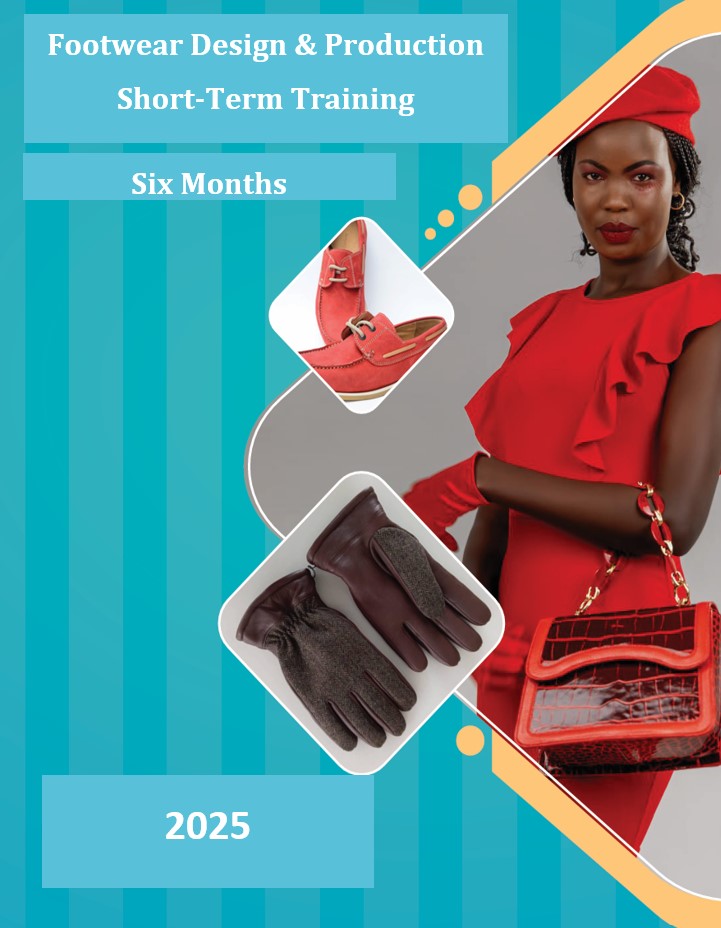
Welcome message
We are thrilled to welcome you to the Footwear Design & Production Training Program at the Ethiopian Institute of Textile and Fashion Technology, Bahir Dar University!
You are embarking on a six-month intensive journey to equip you with the essential, hands-on competencies demanded by Ethiopia’s fast-growing footwear industry. This short-term program empowers youths, women, and migrant returnees with essential, practical competencies in all footwear manufacturing stages. Focusing on 90% hands-on training, it builds technical proficiency, entrepreneurial skills, and creativity. The goal is to create viable employment and support in launching small ventures and boosting community economic development.
We wish you a successful and transformative six months together!
Nomenclature of the certificate:
¨ In English: Certificate in Footwear Design
¨ በአማርኛ፡- በጫማ ንድፍና ምርት የምስክር ወረቀት
¨ Standard period of training: Six months
Introduction
The Footwear Design & Production program at EiTEX is a six-month intensive short-term training initiative to equip unemployed and underemployed youth, women, and migrant returnees with essential competencies demanded by Ethiopia’s fast-growing footwear industry. Through Ethiopia’s broader industrialization and socio-economic transformation efforts, this program promotes practical hands-on skills combined with entrepreneurial and sustainable practices to foster both employability in established enterprises and capacity for self-employment. With Ethiopia’s extensive livestock resources and rising demand for locally made footwear, this program addresses the critical gap in skilled labor in the leather products manufacturing sector. Leveraging the institute’s expertise, facilities, and strategic partnerships, the program is designed to respond to the industry’s immediate human resource needs while empowering vulnerable population groups to partake in economic opportunities.
At the end of the course, the trainee should be able to:
· Understanding basic footwear sewing machines, stitches, and seam types.
· Identify different styles of footwear (derby, oxford, saddle, slipper, moccasin, etc.).
· Knowing the measurements of footwear development.
· Designing, cutting, and pattern-making of the upper and lower parts of the shoe.
· Knowing the bottom components of footwear.
· Knowing about lasting technology.
· Quality check and finishing of footwear.
· Concept of Entrepreneurship for footwear.
Training Objectives
This training program is designed with the following key objectives:
¨ Accessibility and Inclusion: Provide affordable and market-relevant footwear design and production skills to marginalized populations, emphasizing inclusivity to empower women, youth, and migrant returnees in accessing viable employment.
· Technical Skill Development: Enhance participants’ technical proficiency in all footwear manufacturing stages, such as pattern-making, cutting, stitching, assembling, finishing, and machinery operation, using the best industry practices and modern tools.
· Entrepreneurial Capacity Building: Promote entrepreneurial thinking and business skills, equipping trainees to launch and manage small-scale footwear enterprises or cooperatives, thus fostering local economic development.
· Creativity and Innovation: Inspire creativity and design innovation with attention to current market trends and sustainability principles, preparing participants to create attractive, functional, and sustainable footwear products.
· Lifelong Learning and Adaptation: Foster an adaptable learning mindset to enable participants to continuously upgrade their skills and remain competitive amid changing footwear industry dynamics.
Core Training Modules
The module is structured into six core modules with training spans 480 hours about 10% theory and 90% practical training.
Module No. | Module Name | Total Hours | Description |
FD601 | Footwear Designing | 130 hrs | Covers styles, pattern-making, and workspace safety. |
FD602 | Footwear Upper Cutting | 60 hrs | Focuses on cutting tools, machine use, and upper materials. |
FD603 | Footwear Upper Closing | 84 hrs | Covers sewing technology, machine maintenance, and assembly. |
FD604 | Footwear Bottom Component Preparation | 86 hrs | Prepares trainees on outsole, midsole, and insole components. |
FD605 | Lasting and Finishing Technology | 100 hrs | Includes lasting techniques, finishing, and quality control. |
FD606 | Entrepreneurship and Market Strategies for Footwear | 20 hrs | Develops business skills, including market research and brand building. |
Expected Learning Outcomes
¨ Participants will acquire foundational skills in footwear design, including sketching and pattern making.
¨ Participants will understand all types of materials used for footwear design.
¨ Participants will develop a personal portfolio showcasing their design projects, which can be used for future job applications or further education.
¨ Participants will handle tools and machinery employed in footwear design and production skillfully.
¨ Participants will develop basic footwear marketing and entrepreneurial skills.
Unique Value To Community And Industry
This training program addresses several critical needs and brings unique value:
Accessible Skills Training: Offers affordable training that widens participation beyond degree programs.
Job Creation: Directly supports employment by equipping trainees with industry-required skills that respond to local manufacturing demands and reduce unemployment and migration pressures.
Entrepreneurial Development: Focus on entrepreneurship empowers participants to start their ventures or cooperatives, thus stimulating local economies.
Practical Focus: Emphasizes skill acquisition through hands-on training in a fully equipped training center supported by expert trainers, ensuring effective learning outcomes.
Social Empowerment: The program enhances life quality for youth, women, and migrant returnees by improving economic independence and promoting inclusive social development.
Sustainability and Innovation: Encourages sustainable practices and creative problem-solving in footwear design, preparing participants for evolving industry standards.
Addressing Market Demand: By targeting the skills gap in the footwear sector, the program ensures a well-trained workforce ready to meet manufacturers’ quality and innovation requirements.
Practical, Hands-On Learning: The program centers on real-world skill acquisition through comprehensive workshops and expert instruction, fostering effective workplace readiness.
Conclusion
The Footwear Design & Production Short-Term Training Program offers practical and theoretical knowledge in shoe design, pattern making, and sustainable material use. The training includes footwear sketching, prototyping, construction techniques, branding, marketing, and entrepreneurship skills to equip trainee to meet market demands effectively. With a strong focus on sustainability and innovation, it prepares individuals for roles in footwear manufacturing industries, promoting inclusive economic growth and community empowerment. This program bridges education and industry needs, fostering skilled, innovative, and market-responsive professionals, supporting sustainable industrial development and livelihood improvement
Contact Information:
· Seid Ahmed (+251925229089)
· Biniyam Solomon (+251921243999)