 English
 French
 German

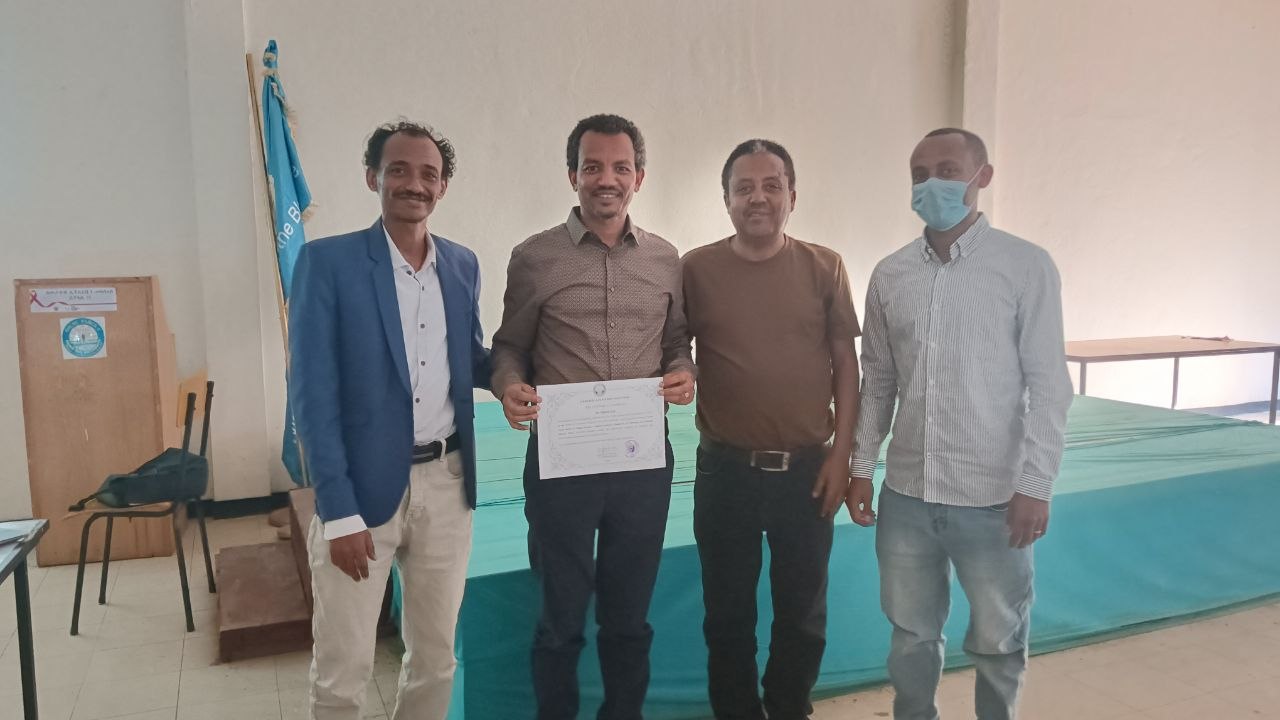
Friday Seminar- Dr. Samson Leta
Zenzelma Campus, Bahir Dar University
26 Dec, 2025
(Bahir Dar, Ethiopia, 26 December 2025) - The School of Veterinary Medicine at Bahir Dar University was flourishing with intellectual energy this Friday as it hosted a visionary presentation in its Friday Seminar Series. The esteemed guest, Dr. Samson Leta from Addis Ababa University, delivered a compelling and urgent talk titled: “From Local Niches to Global Threats: A Spatial Analytics Framework for Emerging and Endemic Disease Risks.”
The seminar, attended by the Dean of the School of Veterinary Medicine, Dr. Yeshwas Ferede, department heads, and the academic staff, was not just a lecture; it was a call to action for a smarter, more proactive future in public and animal health.
Dr. Samson began by laying bare the formidable challenge facing global health, noting that vector-borne and endemic diseases account for a staggering 17% of all infectious diseases and claim over 700,000 lives annually. He highlighted Africa’s disproportionate burden, which carries 95% of the world’s estimated malaria deaths. He underscored the significant epidemic and pandemic threats posed by arboviruses causing diseases such as Dengue, Zika, Chikungunya, and Yellow Fever.
He presented a critical dilemma for current health strategies: Why do control efforts often fall short? The answer, Dr. Samson argued, is a fundamental lack of precise intelligence. We are often left asking where we should look, when we should act, and what the potential risk truly is, without data-driven answers.
The core of Dr. Samson’s presentation offered a powerful solution: a Spatio-Temporal Analytics Framework. He passionately argued that disease does not occur randomly but follows a discernible geography and rhythm. His innovative framework integrates predictive vector mapping through a time-scale lens, sophisticated outbreak pattern analytics to decode past spatio-temporal signatures, and a global synthesis that weaves diverse data into a clear map of integrated disease risk. This approach transforms disparate information into actionable intelligence, moving the field from reactive guessing to strategic forecasting.
Dr. Samson’s conclusion was both a summation and a manifesto, championing a shift “From insight to impact: a proactive paradigm for disease control.” He envisions a future where control strategies are no longer reactive but are proactive, integrated, and intelligence-driven by adaptive, real-time data. “The tools and the data are within our reach,” Dr. Samson asserted. “By embracing this spatial intelligence framework, we can shift the paradigm from responding to crises to preventing them.”
The Dean of the School of Veterinary Medicine, Dr. Yeshwas Ferede, expressed profound gratitude to Dr. Samson for his groundbreaking presentation. “Today’s seminar has fundamentally challenged and expanded our perspective on disease surveillance,” he said. “Dr. Samson’s work provides the precise roadmap we need to integrate into our research and teaching, preparing the next generation of leaders to be at the forefront of this data-driven revolution.”
By: Dr. Dagmawi Yitbarek, SVM Website Administrator