 English
 French
 German
Dairy Farms and Blockchain- The Internship Experience
Bavaria, Germany
27 Dec, 2025
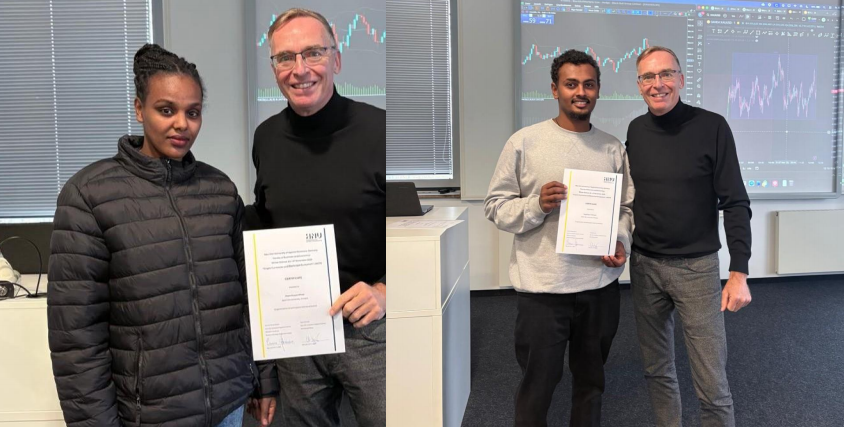
(Bavaria, Germany, December 2025)- The SCEFAB project, led by the Africa Institute at Hochschule Neu-Ulm (HNU), is creating a powerful link between academic theory in Ethiopia and practical agricultural innovation in Germany. Through this initiative, Doctor of Veterinary Medicine students from Bahir Dar University’s School of Veterinary Medicine, Tsega Siyum Abriham and Feven Esayas Altaye, are gaining immersive, hands-on experience on high-tech Bavarian dairy farms. This transition from a clinical focus in their home country to a comprehensive management perspective in Germany allows them to master everything from robotic milking systems to advanced artificial insemination.
Beyond the daily operations of the farm, the program integrates cutting-edge technology through a specialized Blockchain Winter School. Here, the students explore how decentralized ledgers and tokenomics can be applied to the agricultural sector, specifically to enhance the transparency and efficiency of supply chains. This combination of traditional animal production and modern financial technology prepares them to lead the next generation of smart farming.
Navigating this journey also requires significant personal resilience. The students successfully navigated major cultural shifts, from adapting to the freezing German winter to overcoming language barriers with local farmers through the use of digital translation tools. By embracing these challenges, they have gained a broader global perspective and a disciplined work ethic that they intend to bring back to their professional careers in Ethiopia.
Ultimately, these internships serve as more than just a training period; they are a bridge for cultural and professional exchange. As Tsega and Feven return home, they carry with them the technical expertise and innovative mindset necessary to transform the agricultural landscape. Their journey highlights the profound impact of international collaboration in building a more sustainable and interconnected future for global veterinary medicine.
By: Dr. Dagmawi Yitbarek, SVM Website Administrator