 English
 French
 German
Messages from the Director
Greetings
It is my great pleasure to welcome you to the website of the Institutes of Disaster Risk Management and Food Security studies Institutes (IDRMFSS), Bahir Dar University, one of the biggest public researches University in Ethiopia. This message from the Director of the Institute of Disaster Risk Management and Food Security Studies (IDRMFSS) at Bahir Dar University emphasizes the growing global and national crisis posed by disasters, particularly those exacerbated by climate change.
The growing global crisis posed by disasters, especially those intensified by climate change. Recent data (EM-DAT) show that disasters annually claim about 100,000 lives, uproot over 25 million people, and affect more than 200 million. Critically, over 50% of current displacement is attributed to climate change-induced events like flooding and drought, with 90% of disasters over recent decades fundamentally tied to climate change.
As one of the world's most vulnerable countries, Ethiopia has long been affected by hazards, notably the current El Niño-induced drought. In recognition of this reality, the government ratified the Ethiopian Policy on Disaster Risk Management (EPDRM) in 2024. This landmark policy spurred a critical sector shift from merely providing relief and response to integrating disaster risk management (DRM) into sustainable development initiatives.
Due to the policy demand of human resources in DRM Profession, Bahir Dar University quickly responded to the subsequent human capacity and research gap:
- 2005: Established the Department of Disaster Risk Management and Sustainable Development (DDRMSD), offering a BSc program.
- 2007: Launched MSc in Disaster Risk Science and Sustainable Development, 2016: launched MSc in Climate change and development,
- 2020: launched MSc in Livelihood and Food Security and
- 2021: Disaster Risk Management and Food System Resilience.
- 2021: Launched the PhD in Disaster Risk Sciences
- Capacity Building: These programs have since produced over 300 BSc, 80 MSc and 1PhD graduates, contributing trained personnel across the country.
As part of BDU's strategic plan, the Department was upgraded to the Institute for Disaster Risk Management and Food Security Studies (IDRMFSS). The Institute now operates with a comprehensive approach:
- Academic Programs: Offering quality education and training.
- Research: Conducting policy-oriented and community based research.
- Community engagement: Providing community-based Disaster Risk Reduction (DRR) engagement
The IDRMFSS is strategically focused on realizing its DRR Vision 2030, which aims to make the Institute a "centre of excellence" and a source of information for DRM, Food Security, and Climate Change Adaptation education, research, and training in the horn of Africa.
To achieve this, the Institute maintains strong international, regional, and national partnerships for accessing financial and professional expertise. Key collaborators include:
- Academia: different public universities of Ethiopia, PeriPeri U, University of Arizona (USA), UJI (Spain), Stellenbosch University (South Africa), Africa Uninet in Australia and others
- UN & Government: USAID, UNDP, WFP, FAO, UNISDR, World Bank, European Union, EDRMC, FDRMC, Industrial Park Development Corporation (IPDC) and Regional DRMC.
- NGOs: OXFAM, CARE Ethiopia, Save the Children, and Red Cross societies.
The message concludes by positioning the Institute’s work—including stakeholder consultative workshops—as essential for building capacity, contributing to the "Science-policy-practice interface," and ensuring that DRR is fully integrated with global climate change and sustainable development agendas.
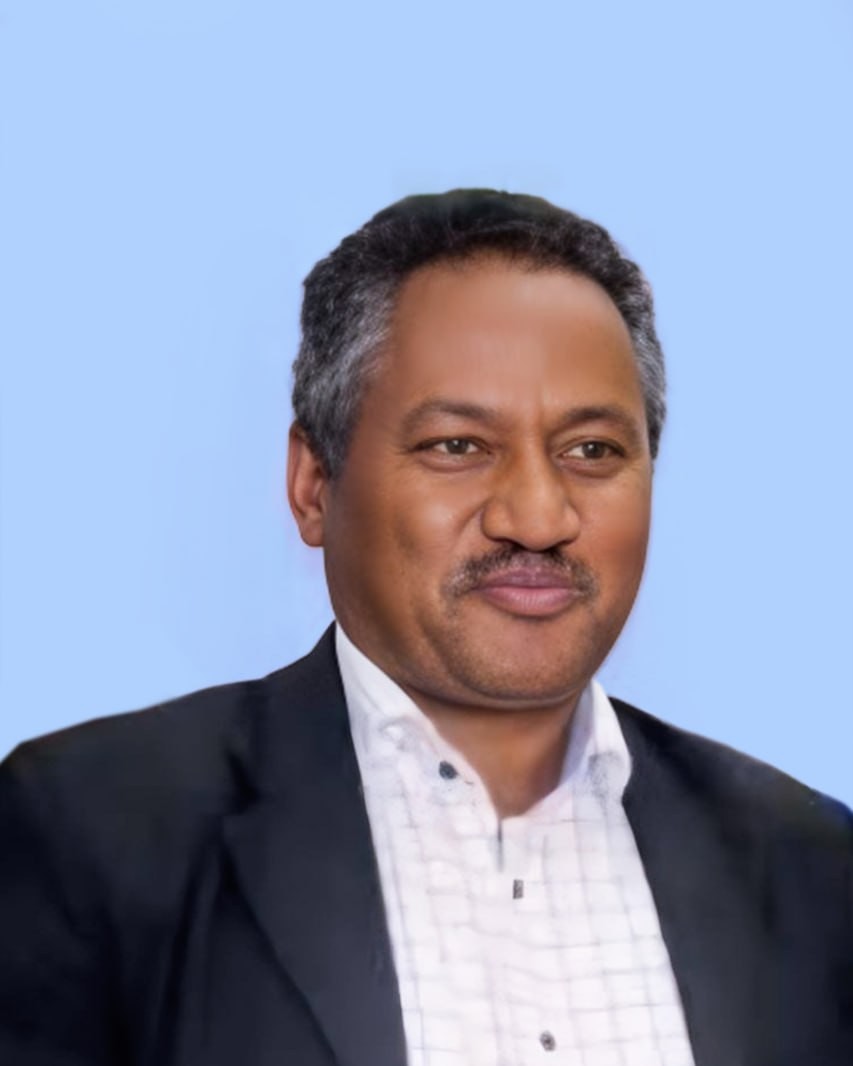
Dr Adane Tesfaye Lema
Director of Institutes of Disaster Risk Management and Food Security Institutes (IDRMFSS)